Buying Guides
LED Cabinet Lighting: The Complete Buyer's Guide for Purchasers, Engineers & Designers
Types, control and dimming spectra, EU SVM≤0.4 / EN 62493 compliance, market requirements and buyer pain points — an engineer's cabinet lighting guide for purchasers, engineers and designers.
Cabinet lighting is the lowest-priced, highest-liability category in the lighting industry. A full kitchen runs to tens of thousands of dollars; the strips, shelf lights and sensors inside account for maybe three percent of that. When a light fails, the phone call goes to the furniture brand — never to the factory that made the light. And cabinet lighting never fails quietly: the color temperature drifts and one wall of cabinetry turns two shades cooler; a sensor dies and the customer blames the cabinet; a driver gives up somewhere above the ceiling and one service call costs more than every driver in the kitchen.
For purchasers, engineers and designers, cabinet lighting is a cross-disciplinary field that nobody teaches: half lighting engineering (optics, drivers, flicker, EMF), half furniture manufacturing (structures, tolerances, line tempo, installation seconds). This guide is written for those three roles. Purchasers will learn how to screen suppliers and which clauses belong in the contract. Engineers will find the failure mechanics behind each parameter and how to verify them. Designers will learn what to specify, scene by scene.
The category is bigger than most people assume: under-cabinet lighting alone is already a two-billion-dollar market growing at roughly nine percent a year toward three billion by 2030. The budgets are growing. The ways of getting it wrong are not.
ARTLITE GROUP has supplied lighting to customers in 45+ countries since 2010, and a significant share of those projects are OEM/ODM cabinet lighting systems. The standards and cases in this guide come from real orders.
1. The Complete Classification: Know What You Are Buying
Cabinet lighting is not one product; it is a system. Break it down by form, power, control and dimming before you compare prices:
By form and installation — eight families:
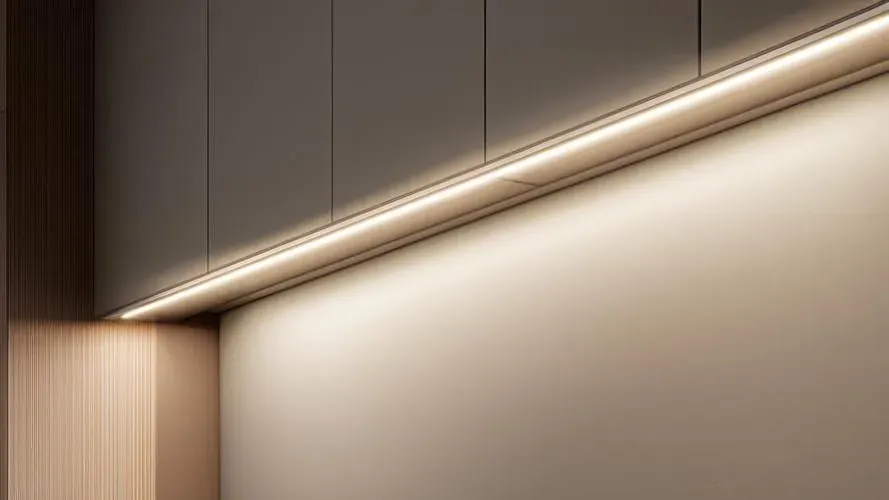
- Under-cabinet lights — the workhorse of kitchen projects, in three product forms: flexible tape (continuous, even runs), rigid aluminum-bar profiles (diffused, spot-free) and puck lights (focused pools for accents). Two optical directions: direct-down and angle-wash (grazing the backsplash) — the wash version is displacing direct lighting in European premium kitchens.
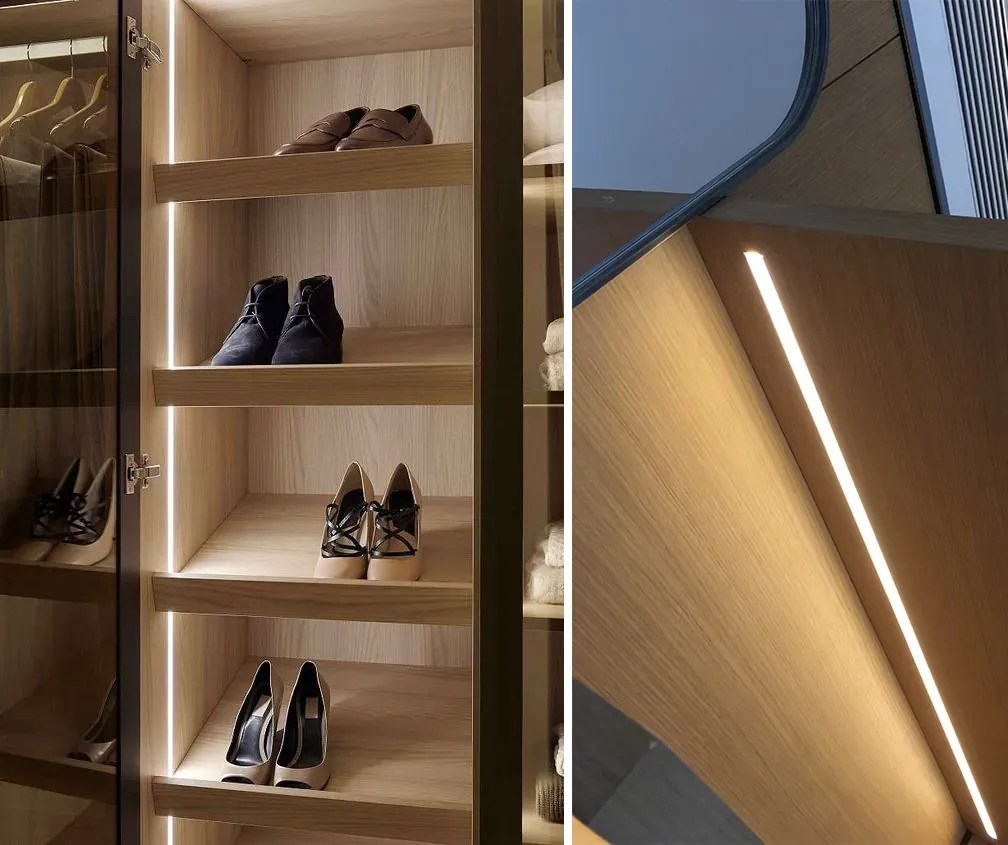
- Shelf lights — clip-on (8-14 mm) or recessed; dedicated glass-clamp versions for glass shelving. The default for walk-in closets and display cabinets.
- Wardrobe rail lights — the rail is both a hanging rod and a luminaire. Profile wall thickness and end fixings decide whether it sags under a rail full of winter coats; qualify it as a load-bearing component, not as a light.
- Drawer and door-panel lights — 6-10 mm ultra-thin, triggered on opening.
- Display-case mini spotlights — 1-3 W spots for jewelry, watches and models; beam control in a tiny body is the whole game.
- Mirror and bathroom cabinet lights — IP44 minimum, mirror-glare control, anti-condensation.
- Toe-kick (plinth) lighting — strips in the recessed base creating the floating-cabinet effect and nighttime wayfinding. Decorative, medium output.
- Above-cabinet uplighting — tape behind crown molding or on top of wall units, bouncing soft ambient light off the ceiling; paired with under-cabinet light it completes the three-layer scheme.
By power architecture — three systems:
- 12V/24V low voltage with remote drivers — the European mainstream: only safe low-voltage wiring inside the cabinet, maintainable, sensor-ready. One actionable rule of thumb: beyond three meters of run, move to 24V — voltage drop on 12V visibly dims the far end, and it is the single most common technical complaint in European user forums. Double-end feeding pushes the drop down further.
- 230V/120V mains-direct — driver on board. Common in North America (120V plug-in): no transformer, but maintenance means opening the cabinet.
- Rechargeable wireless — no wiring at all; the fastest-growing sub-segment in the retrofit and e-commerce channels.
By control (triggering) — the full spectrum of ten:
- Mechanical door-push switch — cheapest, mechanical wear life.
- Reed switch — magnet on the door plus a hidden contact; no mechanical wear; mature single- and double-door sets.
- IR hand-sweep — wave within 3-8 cm; the touchless favorite for kitchens and worktops.
- PIR body motion — walk-toward fade-on for wardrobes.
- Microwave radar — the most sensitive, and precisely because it penetrates wood it false-triggers on passers-by when mounted inside closed cabinets. Open spaces only.
- Current sensing — detects load change on the driver's primary side to switch "door open, light on" with zero signal wiring inside the cabinet, at a fraction of microwave cost. The quiet workhorse for volume furniture programs.
- Touch — tap on/off, press-hold to dim.
- RF remote (2.4G/433) — low-cost multi-cabinet management.
- Wall-switch direct — the North American hardwired standard.
- Smart ecosystems — Zigbee / BLE / WiFi (app + voice, Matter support growing).
By dimming method — the full spectrum of nine (this is where suppliers separate; confirm every line before comparing prices):
- Phase-cut — leading-edge (TRIAC) and trailing-edge. The residential retrofit mainstream because it reuses existing wall dimmers, but the dim floor sits at 10-20% and deep dimming flickers. Not recommended for commercial work.
- 0-10V / 1-10V analog — simple wiring, commercial staple; floor around 1-10% depending on driver quality.
- DALI / DALI-2 (IEC 62386) — digital addressing, individual fixture control, feedback, ~1% floor. The standard answer for large projects and premium custom work; also the highest cost and wiring burden.
- DMX512 — stage and dynamic effects; only museum-grade display cases need it.
- PWM (driver-level digital) — duty-cycle control; precise low-current regulation and excellent color consistency down to 0-1%, but careless design produces temporal light artifacts. PWM frequency and filtering are where driver brands earn their price.
- CCR (constant current reduction, analog) — continuous current, artifact-free light, higher efficacy at low output; floor around 5-10% with a slight shift at very low currents. PWM vs CCR is the classic engineering trade-off in cabinet driver design.
- Wireless protocols — Casambi (BLE mesh, ~250 nodes per network, the retrofit champion), Zigbee, WiFi.
- Touch dimming — stepped or stepless, the drawer-and-display standard.
- Tunable white (CCT) — dual-channel warm/cool blending; strictly "color tuning" rather than dimming, but purchase orders file it under dimming. Tied to the human-centric trend; the technical entry ticket for premium lines.
Procurement note: the dimming method determines the driver, and the driver determines flicker (SVM) — question five in the checklist below lives or dies on which of the nine you pick.
Change your mindset before you buy: European buyers purchase a system, not a light.
The psychological benchmark for European furniture buyers is Häfele's Loox system — and its shape is telling: not a row of lamps but an architecture. Loox5 feeds frameless cabinets through an integrated busbar, heads are modular and interchangeable, sensing and dimming live in one ecosystem. Two consequences for suppliers: quote "a cabinet lighting system" — luminaires, drivers, sensors, connectors and dimming interfaces, all of it — instead of a per-bar price; and expect to be evaluated on system completeness and expandability, because single-product factories are filtered out in round one. This is exactly why ARTLITE GROUP enters cabinet lighting with in-house design across strips, mini spots, drivers, profiles and sensing: buyers who purchase systems only talk to factories that can supply them.
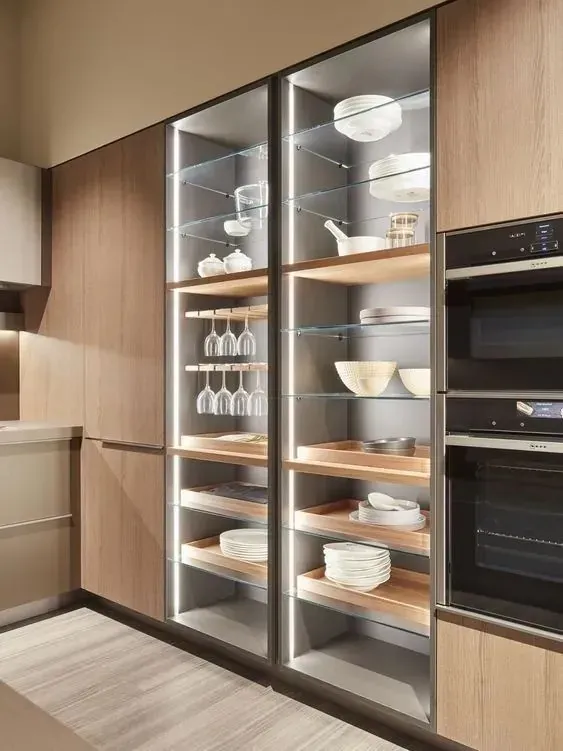
2. What Cabinet Lighting Actually Demands: Four Engineering Truths
"See the light, not the light source" is qualification test number one. Every optical decision — louver angle, source setback, diffuser haze — serves it. The fastest quality check for an under-cabinet light: crouch to eye level. Visible dots? Disqualified.
Low voltage plus an external driver is the fork in lifetime cost. LED drivers die younger than LEDs by design — electrolytic capacitors age faster in hot, sealed cabinets. Mounting the driver in an accessible service position turns year five into a ten-minute swap instead of a demolition. The diagnosis under most "my under-cabinet lights flicker" threads on DIY forums ends at "the driver buried at the back of the cabinet failed." One service call in Europe runs €50-80 — twenty drivers' worth.
Sensor integration is a furniture upsell. Hand-sweep wardrobes and auto-on shelves are how European furniture brands demonstrate "premium." The supplier's job is hinge-grade reliability: one hundred thousand cycles without a miss.
Low power draw is only the passing grade. Cabinet lights are not on long; they are switched constantly. A kitchen door-switch light cycles 15-20 times a day — seventy thousand times over ten years. The component selection logic is completely different from outdoor lighting, which is exactly where generalist factories stumble when they move into cabinets.
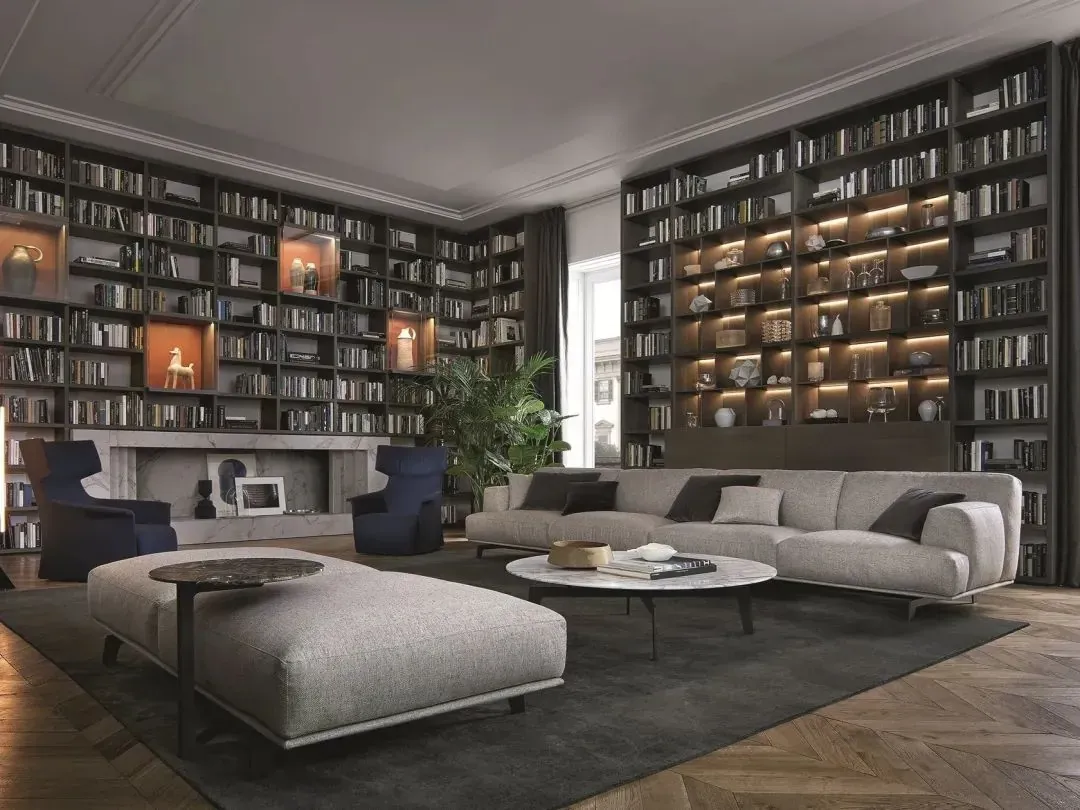
3. Applications and Specifications: Six Scenes, Six Different Jobs
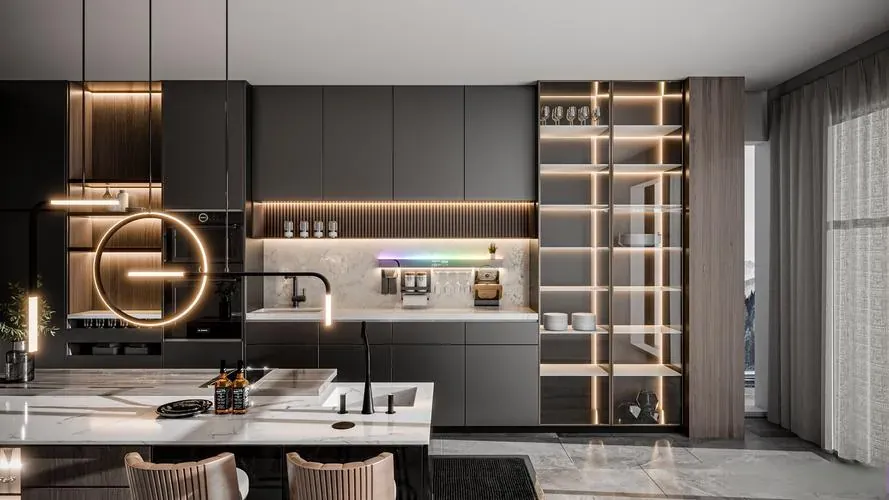
- Kitchen under-cabinet — the main battlefield. Uniformity on the worktop, wipeable oil-resistant surfaces, coordination with the hood light. Angle-wash optics are displacing direct-down.
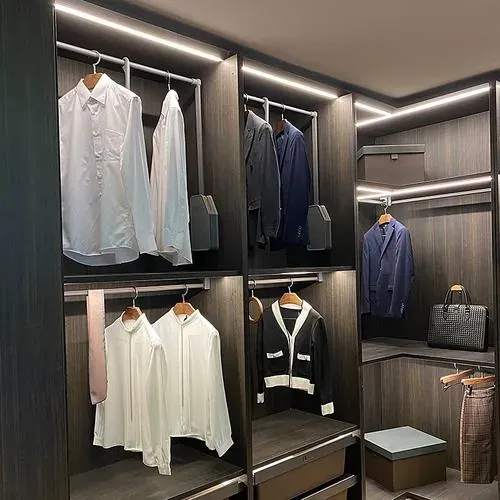
- Wardrobes and walk-in closets — rail load plus presence sensing. 4000K neutral white keeps garment colors honest; tunable white is the premium differentiator for fitting moments.
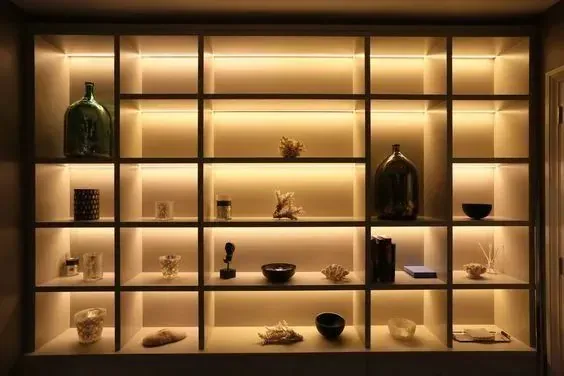
- Display cabinets (jewelry, watches, models) — CRI≥90 is the entry ticket; the real work is beam angle (10-24°) and IR/UV cut to keep exhibits from fading. Dark velvet trays want 24° spots within 300 mm of the exhibit.
- Food display cases — R9 (strong red) is what sells meat and bakery; 3000K vs 4000K visibly changes perceived freshness. This is where a designer moves retail numbers.
- Office furniture — under-desk and screen-fed lights, 4000K matched to the room's system, office-grade flicker compliance.
- Mirror and bathroom cabinets — IP44 minimum, vertical side lights or a shielded top bar, anti-fog.
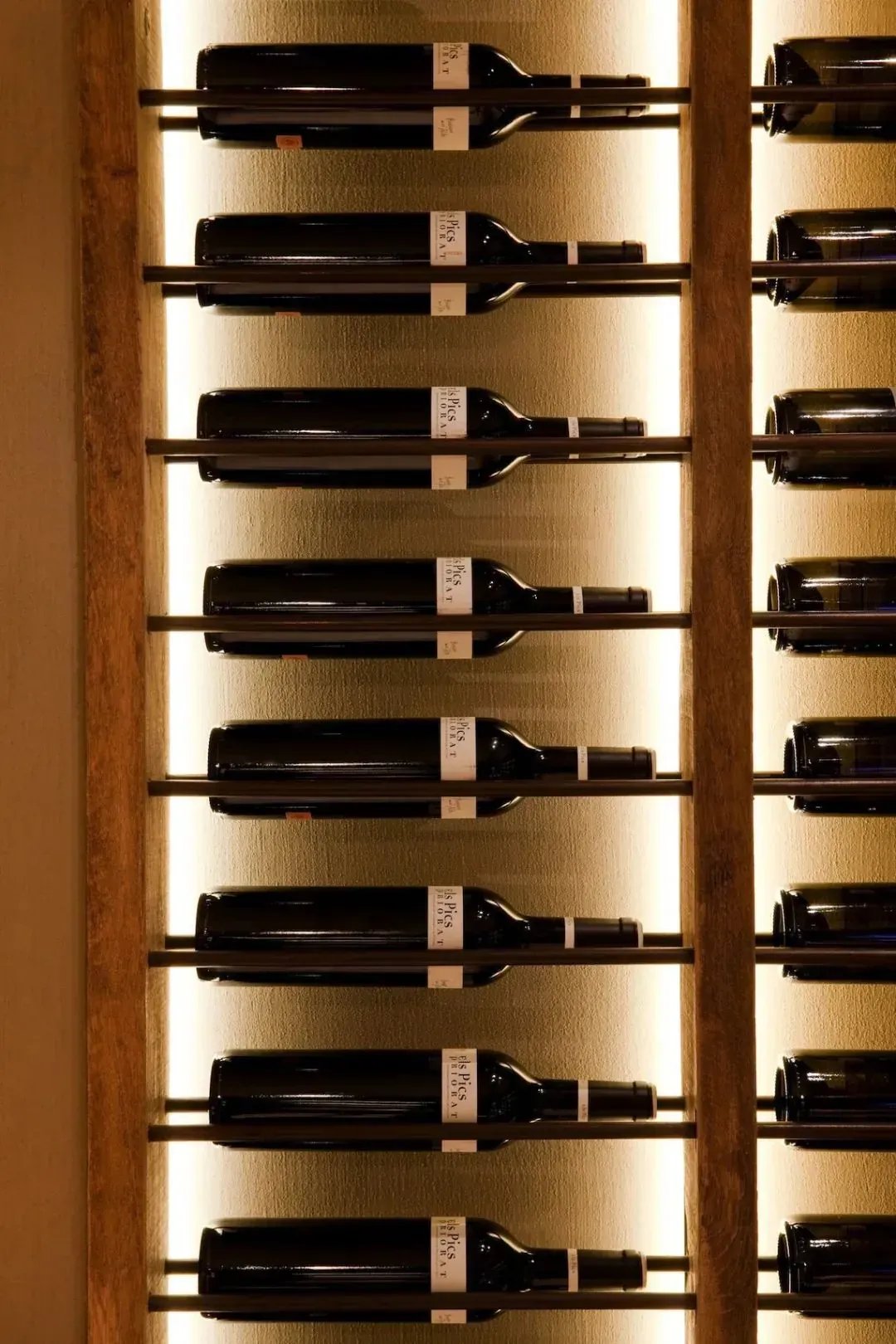
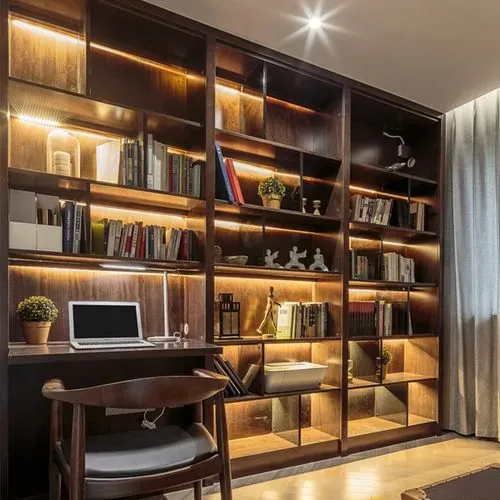
Trend signals for 2026 — four lines warming up in Western markets: seamless integration (hidden-by-default is now the passing grade); tunable white and human-centric dimming entering premium kitchens and wardrobes; statement lighting inside glass-front cabinets; wireless and rechargeable retrofit lights growing fastest. Each trend line maps to a product line a supplier should be ready with: wash-grazing optics, dual-CCT systems, high-CRI mini spots, rechargeable shelf lights.
4. Real Market Requirements: The Part the Textbooks Skip
This is the most valuable section of this guide. Cabinet lighting sits between "furniture component" and "luminaire," and every market regulates and channels it differently. Sort this out before quoting, not at the port.
Europe: strictest rules, best margins
- EN 62493 EMF assessment. Furniture lighting falls under the LVD with a human-exposure EMF requirement — EN 62493 (current edition 2015+A1:2022; the A1 revision aligns limits with ICNIRP 2020). Many Asian factories know CE/EMC and go blank the first time a European buyer asks for this report. Two insider details: the assessment uses the standardized Van der Hoofden test head, and the driver — not the bare low-voltage module — is what gets scrutinized.
- SVM≤0.4. EU ecodesign regulation (EU) 2019/2020 requires the stroboscopic effect visibility metric SVM≤0.4 at full load for LED sources (with PstLM≤1.0). Flicker performance is driver-determined, so this clause is really a driver-selection exam. Small-power cabinet drivers are exactly where a cheap pick lands at SVM 1.0+ — and off the EU shelf.
- RG0 blue-hazard exemption. Mirror and desk cabinets are close-task luminaires; IEC/TR 62778 (within the IEC 62471 photobiological framework) should come back RG0.
- Cross-batch consistency SDCM≤3. The wholesaler's silent killer: batch one is 3000K, the replenishment eight months later is 3200K, and one wall of cabinets splits into warm and cool — full return. Bin control and cross-batch consistency belong in the contract.
- EOL notification. A wholesaler's SKU lives three years and the cabinet drilling is fixed for three years. A silent discontinuation kills the downstream line. Mature buyers demand a written end-of-life notice clause — typically 6-12 months.
- Private label and market protection. European cabinet-light wholesalers require neutral packing under the customer's brand, effectively without exception, plus a commitment not to supply the same item to other customers in their market.
North America: a structurally different world
- 120V, and a large plug-in under-cabinet segment alongside hardwired: ask which world the order lives in before engineering anything.
- Compliance runs on ETL/UL (UL1532/UL2108 family); California adds Title 24 / JA8 high-CRI (CRI≥90) — kitchen cabinet lights walk right into it.
- Dimmer compatibility is the number-one review killer. Retrofit kitchens reuse existing TRIAC wall dimmers; test compatibility before production and ship a compatibility list — incompatible dimmers are the top flicker complaint in North American forums.
- Installation culture expects "electrician needs no phone call": the product must be simple enough for an $80/hour electrician to finish without support.
Middle East & Southeast Asia: environment first
- Sealed cabinet interiors reach 50-60°C in summer; a generic 105°C/3000h capacitor loses half its service life. High-temperature markets need long-life capacitors and derated design.
- Coastal salt haze: corrosion class of hardware and connectors is a pre-order decision.
Japan: tempo and tolerance
- Installation windows are measured in hours: clip-on, one-second, zero-adjustment mounting; dimensional tolerances tighter than Europe. Good margins, highest engineering bar.
5. Pain Points and Solutions for Four Professional Readers
1. Purchasing managers at lighting brands and regional wholesalers — risk and continuity
Pain: cross-batch consistency; EOL discontinuations; market protection; quality-claim evidence under payment terms. Fix: single-bin LED sourcing with SDCM≤3 written into the order; written EOL notice at 12 months plus a tail-order lock window; neutral packing under the customer's brand with market-exclusivity clauses; batch-archived photometric reports for traceability. These are not discounts — they are contractual obligations, and they are the scorecard mature European buyers grade suppliers against.
2. Lighting and electronics engineers — failure mechanics and verification
Pain: sealed-cabinet heat cuts driver capacitor life; microwave sensors false-trigger through wood; long low-voltage runs drop voltage; recessed fixtures fight board tolerances; EMF/EMC reports missing at the worst moment. Fix, item by item: derate capacitors to the real cabinet temperature (long-life series for hot markets); avoid microwave inside closed cabinets — door-contact, hand-sweep or current sensing with 100k-cycle verification; 24V architecture with double-end feeding; recess grooves dimensioned to board tolerance with a mock-up trial; EN 62493 / SVM / RG0 reports produced along the development flow, not patched before shipment. ARTLITE provides a DFM review on custom programs — structure, sensing logic and driver placement get challenged at drawing stage, not after samples.
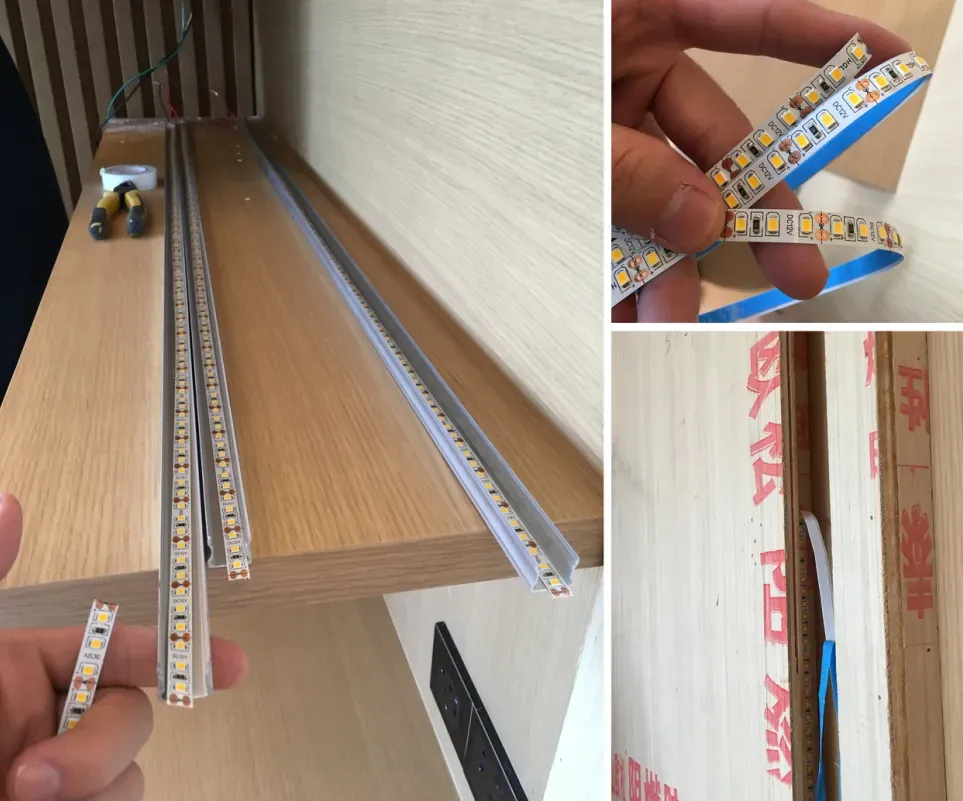
3. Furniture and kitchen-cabinet factories — tempo and after-sales cost
Pain: installation tempo (lines run in seconds), after-sales cost (one visit costs ten times the light), SKU explosion (one cabinet type, one light type, inventory everywhere). Fix: tool-free clips with polarized connectors (wrong pairing stays dark instead of burning); sub-30-second installation per cabinet; drivers consolidated into service positions; a centralized-power architecture where one driver feeds several cabinets, cutting SKU count by 60%. ARTLITE aligns cabinet lighting with the customer's carcass drawings at design stage — the customer never adapts to a standard product.
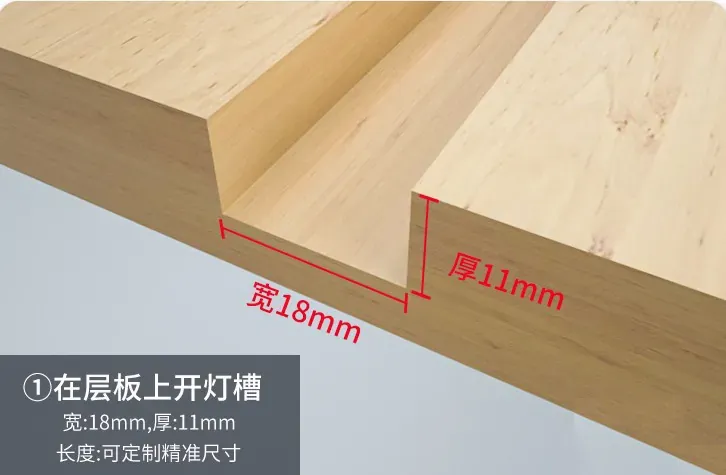
4. Lighting and interior designers — effect and specification
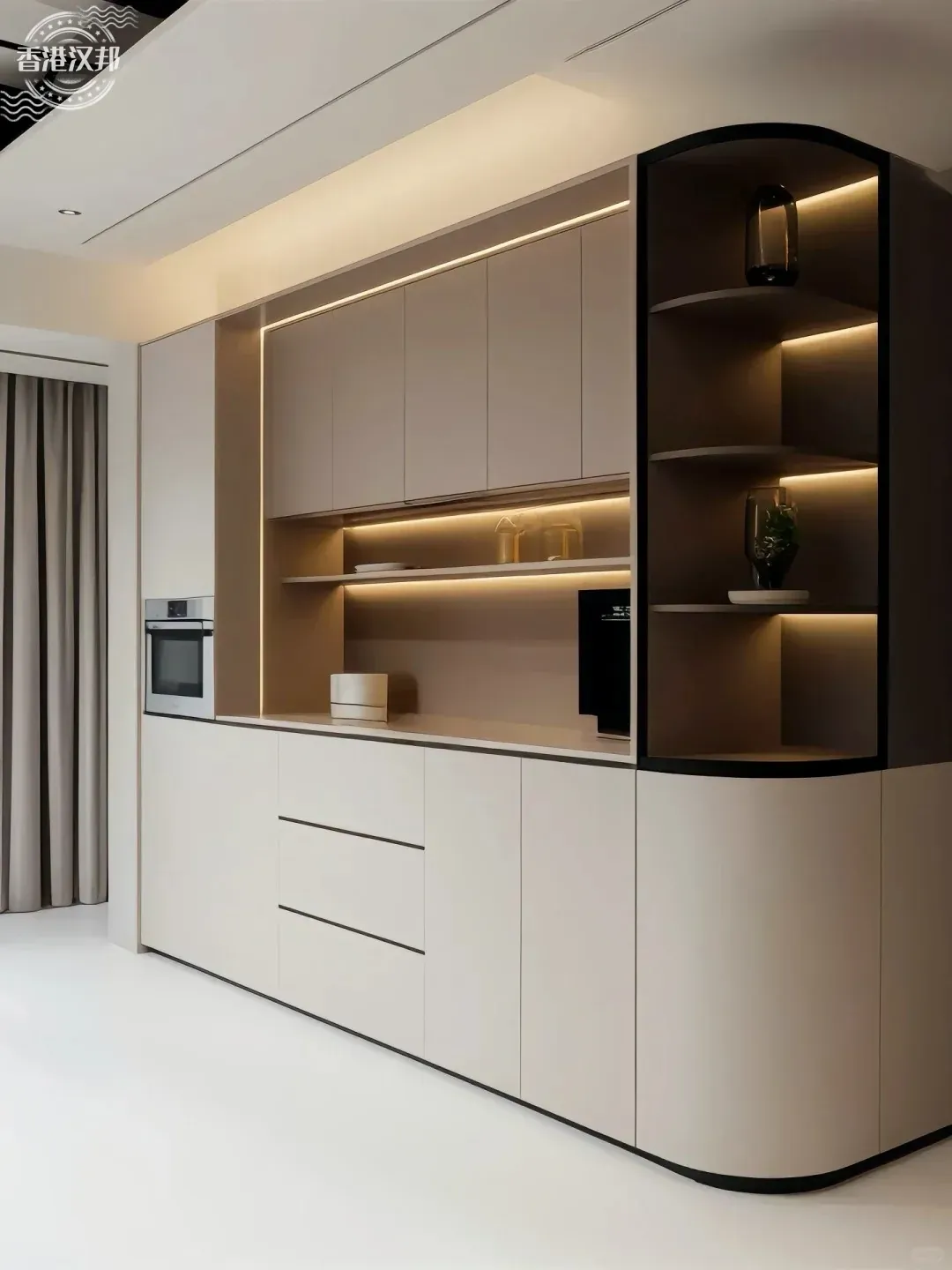
Pain: visible pixelation through diffusers; color distortion on garments, food and premium finishes (low CRI/R9); flicker at low dimming levels; cabinet structure fighting the optical intent (insufficient masking depth, strips hard against the cabinet edge). Fix: high-density or COB sources (continuous line, no dots); CRI90+ with R9>60 where garments and food are on show; driver dimming depth and SVM≤0.4 measured to European standards with reports; louver angle and source setback coordinated with carcass structure at drawing stage. Designers: send the ten-question checklist below as a specification attachment — whoever answers every line belongs on your shortlist.
6. The Ten Questions to Ask Before You Specify
- Installation: tool-free clips? How many seconds per cabinet?
- Power architecture: 12V or 24V? External driver? Centralized power supported?
- Sensing: door-contact / hand-sweep / microwave / current sensing? Cycle life? False-trigger logic in closed cabinets?
- EU compliance: EN 62493 report available? Measured SVM value?
- Flicker: SVM/PstLM data at low dimming levels?
- Blue hazard: RG0 exemption report for close-task use?
- Color consistency: cross-batch SDCM commitment in the contract?
- Driver lifetime: capacitor brand and rating? Derating curve? EOL notice clause?
- Private label and market protection: neutral + customer-brand packing? Regional exclusivity?
- Warranty structure: light and driver covered as one system?
7. Talk to ARTLITE GROUP About Your Cabinet Lighting Program
ARTLITE GROUP's cabinet lighting business starts somewhere most suppliers don't: we don't sell you a standard product and ask you to adapt — we reverse-define the product from your cabinet drawings, with strips, mini spots, drivers, profiles and sensing selected and engineered inside one system. That is how we serve European cabinet-light wholesalers and custom furniture brands. Standard platforms sample in 1-3 days, bulk runs 10-15 days, MOQ from 100 pcs, and every custom program runs under NDA by default.
Send your carcass drawings, target market and requirement list to sales@artlitegroup.com — within 24 hours our engineers return a preliminary proposal with structure and compliance recommendations: purchasers get the risk-clause list, engineers get the DFM review, designers get the optical recommendations.
ARTLITE GROUP — vertically integrated LED lighting manufacturing since 2010, serving clients in 45+ countries.