Oct 13, 2026Buying Guides
How to Select the Perfect LED Linear Lights for Commercial & Architectural Projects: A Buyer's Anti-Regret Guide
Hotspots, dark joints, flicker, ceiling teardowns, the cave effect. An engineer's anti-regret guide to specifying custom LED linear lights for commercial and architectural projects.
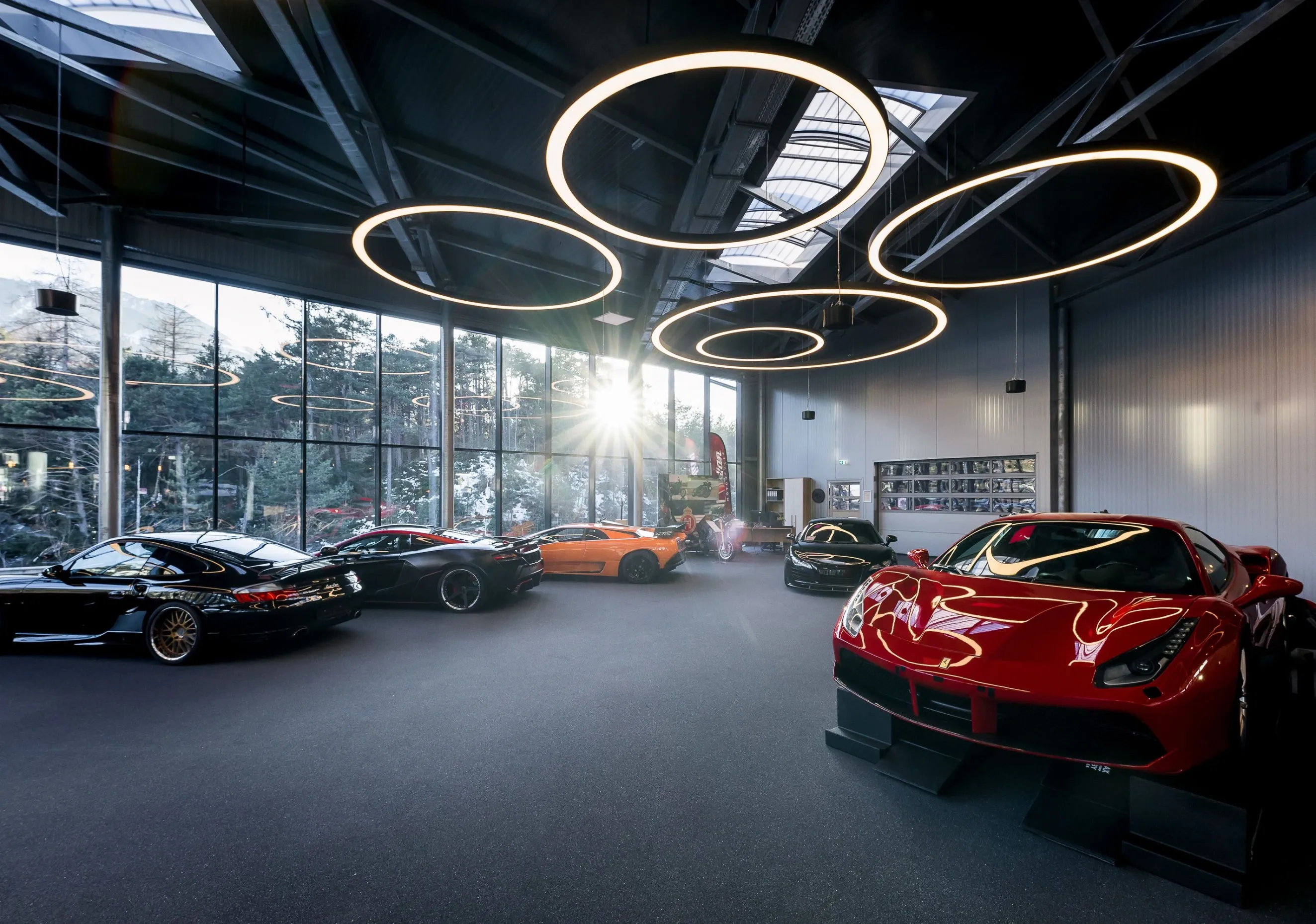
An LED linear light looks like the simplest fixture in the catalogue: an aluminum bar, some diodes, a diffuser. It is actually four engineering problems sharing one body — optics, thermal management, structure, and electronics — and it exposes every one of them in public. A bad downlight embarrasses one room. A bad linear run embarrasses forty continuous meters of lobby ceiling, and it does so every single evening when the sun goes down.
Worse, linear lighting fails in ways that are expensive to undo. The dark inch at every connector joint is discovered after the ceiling closes. The flicker at 8% dimming shows up on the hotel's security cameras. The failed driver sits behind finished drywall above a three-meter scaffold. In sixteen years of building linear programs for overseas brands and contractors, we have watched the same five decisions cause the same five regrets. This guide walks through each one: what goes wrong on site, why it happens physically, and how we engineer it out at the factory — before the container ships.
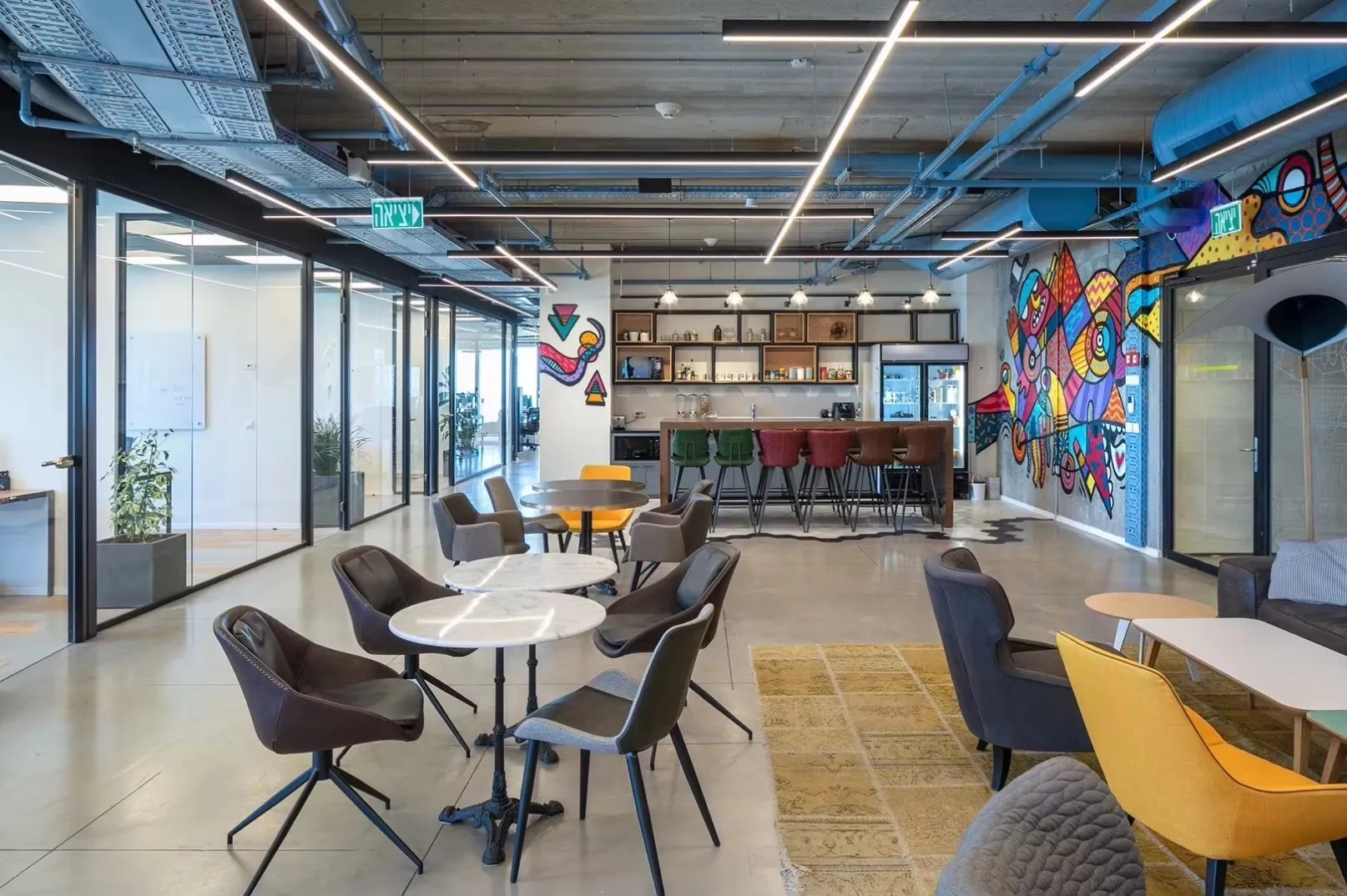
A. Optical Quality: Hotspots, Dotting and the Dark Inches at Every Joint
The pain you already know. You install a premium recessed run, step back, and see it: distinct bright dots through the diffuser — the "disco effect." Worse, at every two-meter joint there is a dim, dirty break in the line of light. The run is technically continuous; visually it is a dashed line.
The root cause is geometry, not quality control. A diffuser can only blend what the light path allows. When LEDs sit 30–40 mm apart inside a shallow housing, the distance from chip to diffuser is too short to average the emission — the diffuser images the diodes instead of mixing them. Pixelation is a proportional problem: mixing distance versus LED pitch. And the dark joints are the same failure at a larger scale — a gap in the LED pitch at the connector, or a bridge where two diffuser halves meet with nothing behind them.
How we engineer it out. As an architectural linear lighting manufacturer, we treat the light line as continuous geometry, not repeated modules:
- Ultra-dense layouts or true COB. Our standard runs use tightly packed diodes; our COB options replace the pitch problem entirely with one continuous phosphor line. No pitch, no pixelation — dotting becomes physically impossible rather than merely reduced.
- Housing depth engineered for color mixing. Our 6063-T5 extrusions are designed cavity-first: the chip-to-diffuser distance is set so the beam is fully blended before it leaves the fixture, not whatever depth was left over after the profile was drawn.
- Gap-less optical runs. Diffusers are specified as continuous optical elements with pre-engineered joint treatment, and every connection point is LED-populated on both sides before it leaves our floor. The line you see on the drawing is the line you get on the ceiling.
- One-bin sourcing. Color drift along a run — the greenish third meter, the pinkish tenth — comes from mixed LED bins. We build from tightly controlled bins (≤3-step MacAdam), so meter 1 and meter 30 are the same white.
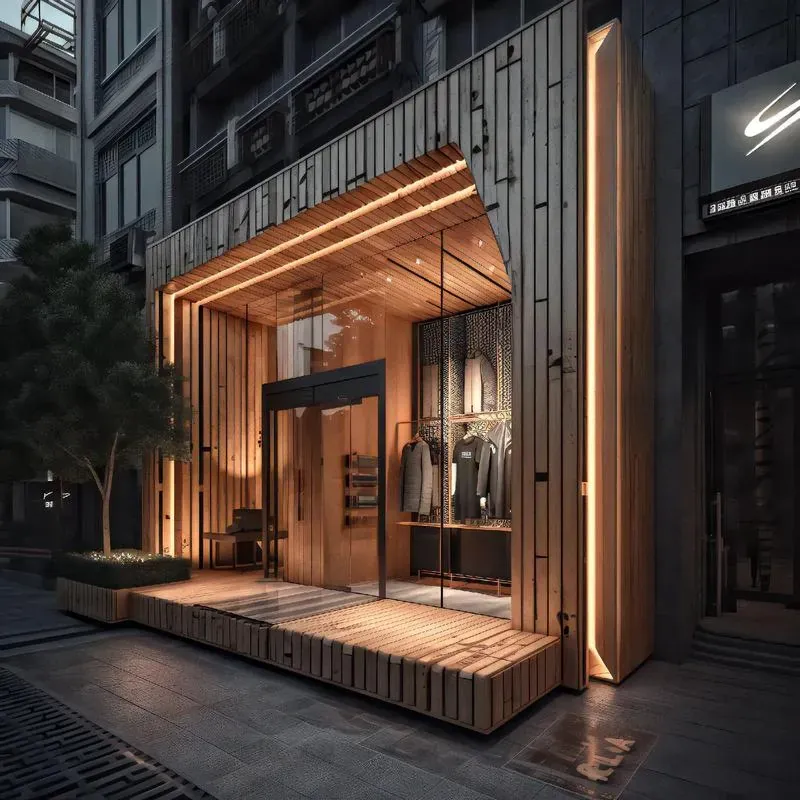
B. Architectural Integration: When the Building Refuses to Come in Standard Lengths
The pain. Your drawing has a 7.4-meter run wrapping a curved reception desk, a closed polygon around a circular pillar, and a mitred corner over an irregular soffit. The factory quote arrives in 1000 mm and 2000 mm modules. Your electricians — at €80 or $110 an hour — spend days cutting, mitering, joining and re-sealing on site. Every field cut through an anodized, IP-rated housing is a small warranty event: debris inside the profile, a diffuser that no longer seats, an ingress path you cannot see but your client's coastal humidity will find.
The root cause. Stock lengths are a factory inventory decision, not an engineering constraint. Cutting, bending and wiring custom geometry requires process capability — controlled bending that does not wrinkle an extrusion, curved diffusers that stay seated, internal wiring that crosses joints without tension. Many suppliers simply do not have that capability, so they sell you the excuse instead of the fixture.
How we engineer it out. Flexible, full-scenario customization is the core of our linear program:
- Any length, to the millimeter. A custom LED linear light from ARTLITE GROUP arrives at 7,420 mm because that is what the drawing says — not 8,000 mm for your site team to butcher.
- Any shape. Circular runs for columns, rectangular frames, triangles, trapezoids, closed irregular polygons — an irregular shape linear fixture is a standard week in our bending and mitering cell, not a special project.
- Factory pre-assembled Plug & Play kits. Corners arrive pre-mitred, pre-wired and keyed, with connectors that only fit the right way round. Each fixture is labeled to its position on your layout drawing and packed in installation order. Your crew clips sections together and mounts them; what used to be days of measuring and sealing becomes hours of assembly. The labor savings alone typically pay for the customization.
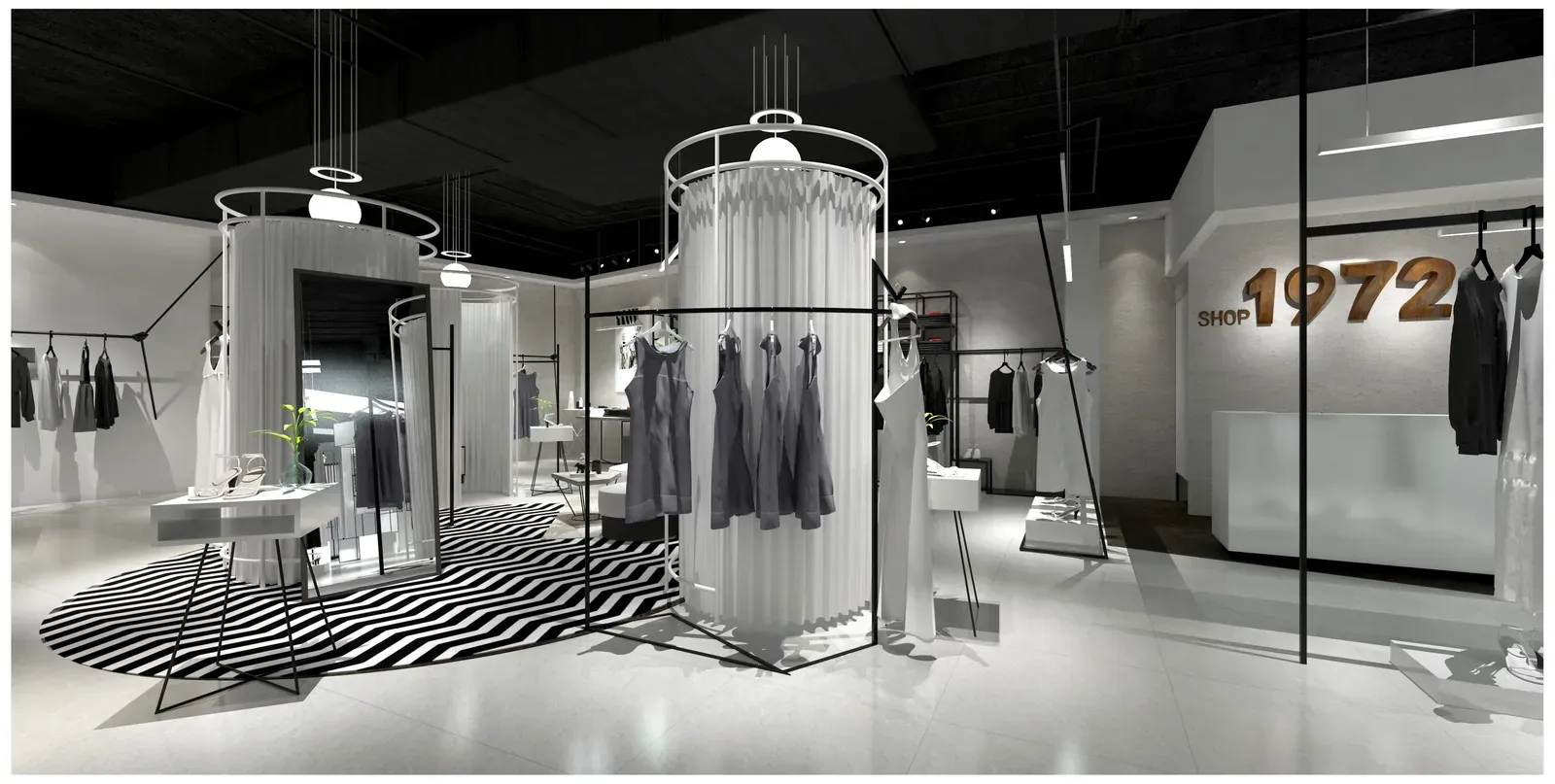
C. Controls and Flicker: The Dimming Disaster Nobody Quotes For
The pain. Two months after handover, the complaints start. The fixture is blinding at full output because the diffuser shows the raw diode array. At low levels on the DALI scene, the run in the restaurant stutters — or drops to black below 10%. The 0-10V sample you approved doesn't behave like the production batch. And the building's new video-conferencing rooms show banding on every camera.
The root cause lives in the driver, not the LED. Glare is a cut-off problem: bare diodes visible at sitting-eye angle. Flicker and low-dim dropout are driver behavior: dimming curves that don't match the load, minimum-load thresholds, phase-cut electronics driving a load they were never designed for. Mismatched driver-to-LED pairings behave differently at 5% than at 100%, and no two production runs behave identically unless someone pairs and tests them deliberately. Camera-visible flicker is measurable — IEEE 1789 exists for a reason — yet most quotation documents never mention it.
How we engineer it out.
- Deep anti-glare optics. Louvered and micro-prismatic shielding options hold UGR below 19 for office and education runs, so the fixture disappears and only the light remains.
- Premium drivers, globally serviced. We build with Meanwell, Philips and comparable international driver brands — units your local electrician recognizes and your client can service anywhere — paired with top-tier LED packages.
- Paired and curve-tested. Driver and LED load are matched and dimming-tested together before the program ships — down to the low single-digit percentages, and to 0.1% on selected driver platforms — across DALI, 0-10V, Triac, Zigbee and Casambi ecosystems. What you approve as a sample is what the container delivers, scene after scene.
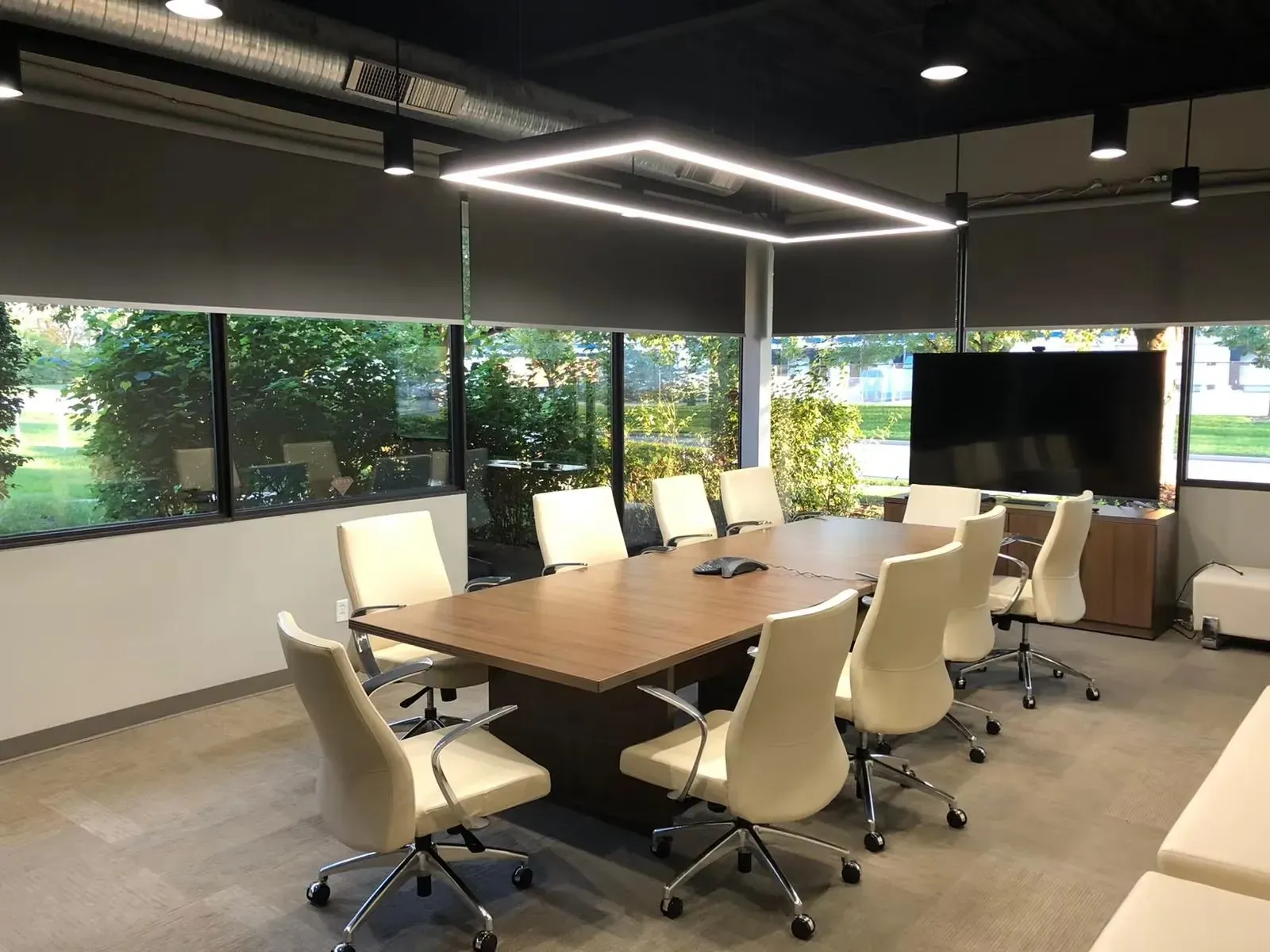
D. Maintenance: The Teardown Effect and the Warranty Bill You Haven't Received Yet
The pain. The driver dies in year four — drivers, with their electrolytic capacitors cooking inside a warm housing, almost always lose the lifespan race against the LEDs around them. In a well-designed fixture, that is a ten-minute exchange. In a badly designed one, the driver is glued inside a recessed housing above finished drywall, and "replacing a driver" means scaffolding, ceiling demolition, repainting, and a very uncomfortable conversation about warranty scope.
The root cause. Fully integrated designs render beautifully and service terribly. The failure is mechanical: nobody planned an access path for the component with the shortest life in the system.
How we engineer it out. We design linear fixtures for the day something fails, because on a ten-year horizon something always does:
- Remote and external driver options, mounted in accessible ceiling voids, joinery plinths or dedicated niches — the fragile part never lives inside the hot, sealed body.
- Centralized power solutions for long continuous runs: one accessible power zone feeding dozens of meters of light line, so a failure is a walk to a panel, not a climb over a reception desk.
- Tool-free access where integration is unavoidable. Magnetic diffusers, quarter-turn fasteners, sliding gear trays and quick-connect wiring throughout: a fixture swap is measured in minutes by one technician, not hours by two.
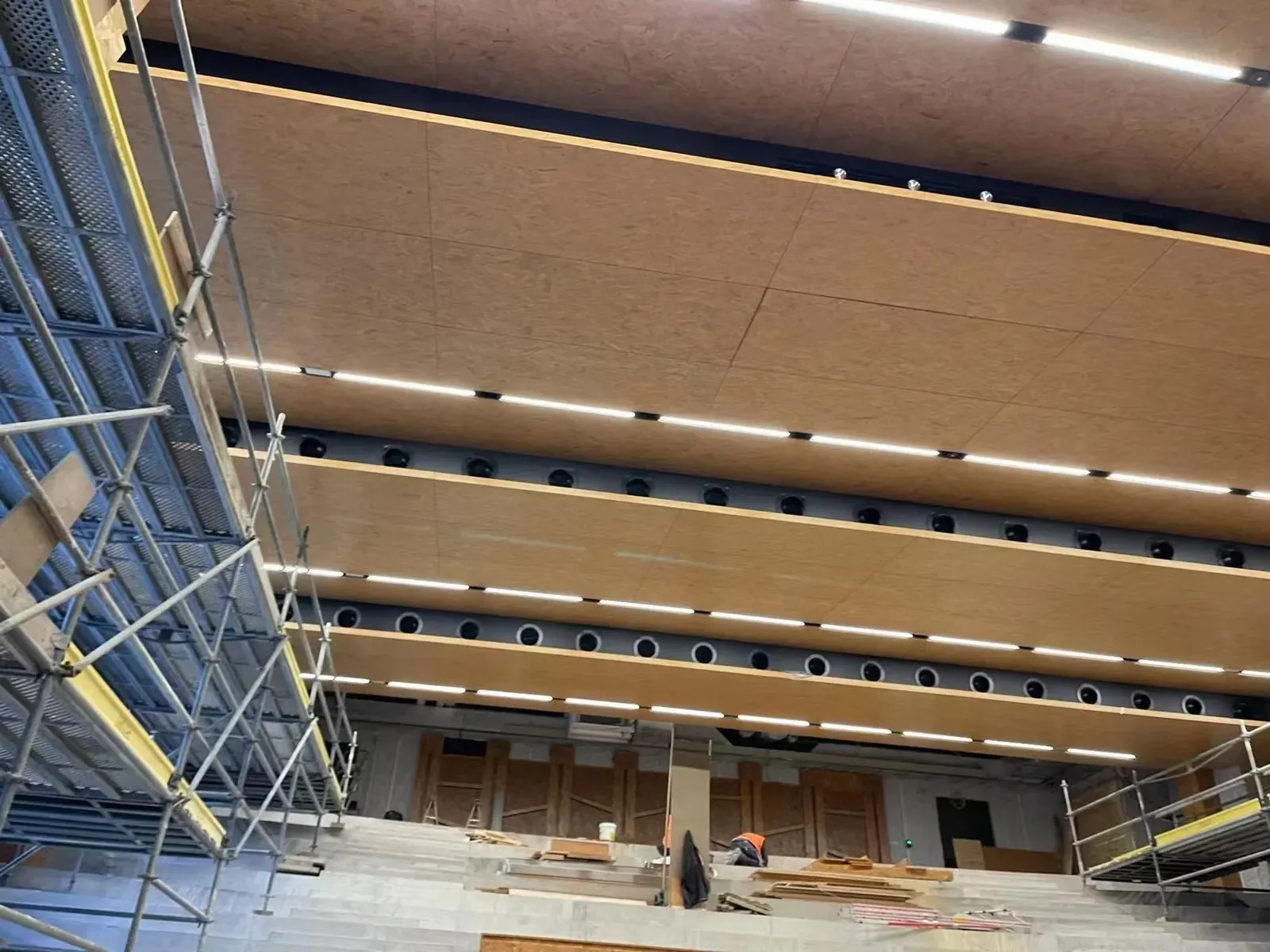
E. The Cave Effect: Bright Floor, Black Ceiling, Oppressive Room
The pain. The spec optimized every lumen onto the working plane. The photometry is perfect. And the room feels wrong — lower, tighter, faintly institutional. Nobody can name the problem, and nobody wants to relitigate the lighting budget.
The root cause is human perception. We judge a room's volume by its lit surfaces. A pure downlight distribution leaves the ceiling in darkness; the eye reads that black plane as a lid. The space wasn't underlit — it was unbalanced.
How we engineer it out. Distribution is a specification choice, and we build fixtures around your choice rather than around our stock:
- Up and down linear pendants (direct/indirect). A 30% up / 70% down split is our most requested custom ratio: the upward component washes the ceiling and dissolves the lid, the downward component carries the task performance. The ratio is yours to set — we have built 50/50 for studios and 20/80 for retail.
- Up-only and wall-wash distributions for coves, reveals and perimeter runs that lift the whole room without a single fixture pointing at the floor.
- One platform, any distribution. Because the optics are built to order, changing the distribution does not mean changing the architectural language of the project.
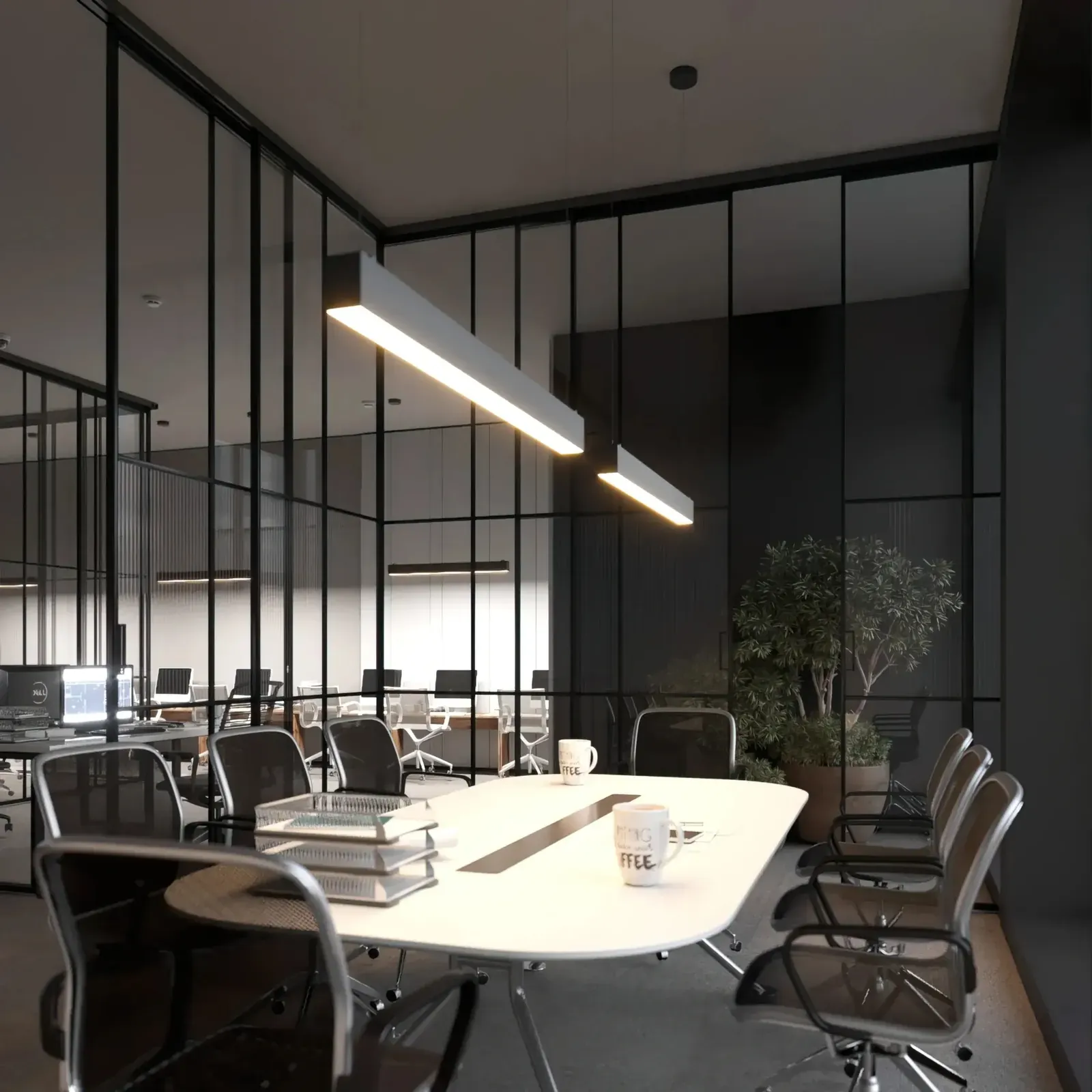
Know Your Families: Four Types of Linear Light, Four Different Contracts
No linear light wins everywhere. Facades, offices, gyms and parking structures examine the same extrusion against completely different standards — ingress protection, beam control, material grade and mechanical format. Buyers who treat them as one product family buy twice. Know which family your project is actually procuring:
Family | Core Construction | Best For | Strengths | Watch-outs | ARTLITE Custom Answer |
|---|---|---|---|---|---|
Silicone LED neon strip | Co-extruded one-body silicone; IP67/IP68; micro formats; bends in every plane | Facade washing, outdoor landscape, extreme humidity, joinery coves | Conforms to any curved facade; 100% seamless, zero dark zones; UV- and weather-stable | Lower lumen density than aluminum profiles; long runs need feed-point planning | Micro side-emitting 4×8 mm to 5×8 mm profiles; 270° wide-angle emission; molded cutting marks so outdoor trimming stays leak-free |
Architectural office linear | Aluminum profile; up/down distributions; branded flicker-free dimming | Grade-A offices, boardrooms, open workspaces, schools, healthcare | Refined optics (UGR<19 deep anti-glare); indirect light removes the dark ceiling | IP20/IP44 only; site assembly punishes poor joint accuracy | 6063-T5 aviation aluminum with tool-free maintenance; smooth dimming to 0.1% on selected platforms (DALI / 0-10V / Zigbee); 30% up + 70% down combinations |
Commercial & gym linear | High output 130–150 lm/W; impact-resistant build; multi-angle lenses | Commercial gyms, concept showrooms, premium warehouses, sports halls | Extreme brightness with strong penetration; resists vibration and knocks | Exposed industrial aesthetic — a mismatch for refined interiors | Symmetric, asymmetric and polarized PC lens options; high-CRI packages (CRI92+ COB) for muscle tone, skin and merchandise color |
Parking & utility linear | Economy continuous-run systems; integrated microwave sensing | Underground parking, back-of-house corridors, production halls | Lowest purchase-plus-lifetime cost; sensor logic ("car in, full bright; car out, standby") saves the most energy | Standardized industrial look; coarse dimming behavior | Industrial-grade durable builds with LiFud / Eaglerise long-life drivers; custom-integrated microwave sensors and 6–10 kV surge protection |
Application Deep-Dives: What Each Project Type Is Actually Buying
1. Building Facades: Why Silicone Neon Strips Win the Night
Where buyers get burned. Traditional outdoor wall washers and rigid profiles fight the architecture they are supposed to serve — brackets interrupt the facade, and at night every long-run joint shows as a dark line. The graver failure is chemical: two summers of UV and rain drive cheap housings to widespread yellowing, water ingress and dead sections, and facade remediation means rope access crews, not a stepladder.
What the application actually demands is weather resistance and mechanical compliance in the same body — the fixture must survive the climate and follow the curve.
How ARTLITE builds for it. Our co-extruded silicone LED neon strip carries IP67/IP68 in a one-body silicone format with no secondary sealing to fail. Main facades run standard exterior formats from 5×12 mm up to 10×23 mm; narrow reveals and curtain-wall joints take our 4×8 mm and 4×10 mm micro side-emitting profiles, which throw light sideways out of gaps no downlight can reach. Because the emission line is seamless, the architecture reads as one continuous stroke of light, and the UV-stable silicone is why it still reads that way in year five. Every profile carries molded cutting marks, so the one thing your installer is allowed to do on site — trim to length — never compromises the seal.
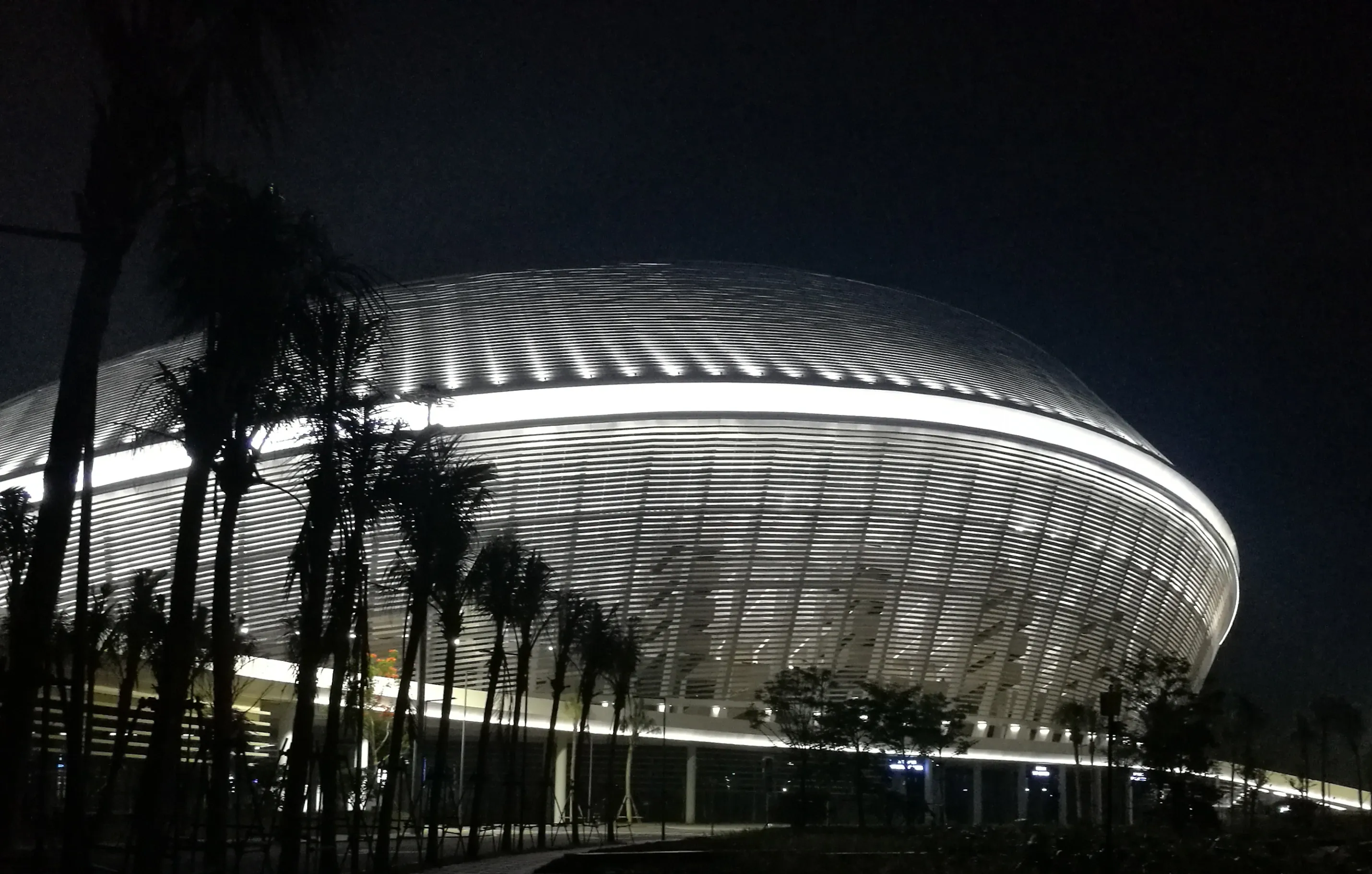
2. Corporate Offices: Sell Visual Comfort, Not Lumens
Where buyers get burned. Staff sit in front of monitors for eight hours. If the anti-glare design is weak, every fixture lives on as a reflection in the screen, and eye-fatigue complaints land on facilities management — not on the fixture brand that caused it. The second failure is the dashed-line effect at joints, which no amount of lux on the desk compensates for.
What the application actually demands is disciplined UGR control and seam-free continuity — comfort engineering, not raw output.
How ARTLITE builds for it. For modern workspaces we build the up and down linear pendant around deep-recessed, louvered chip cavities that hold UGR below 19 at viewing angles. Thirty percent of the flux is thrown upward to bounce off the ceiling slab — widening the perceived space and killing the cave effect covered in section E — while seventy percent delivers precise task illuminance below. The same programs pair with DALI-2 or 0-10V for smooth, flicker-free scene dimming, tuned and tested with the driver before shipping. The result your client notices is not "light" — it is the absence of glare, flicker and joints, eight hours a day.
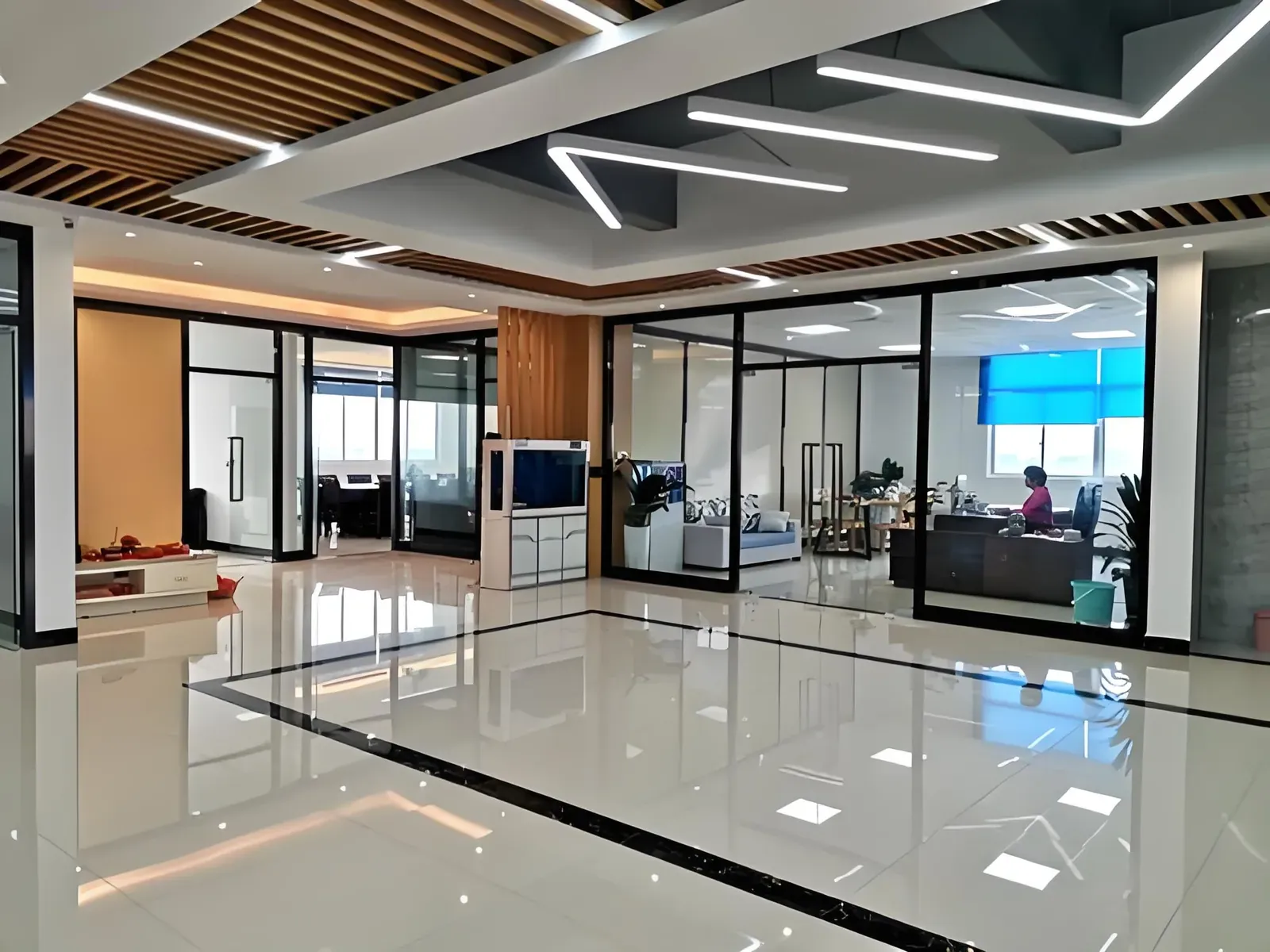
3. Gyms & Concept Showrooms: The Geometry Is the Product
Where buyers get burned. Training floors and brand showrooms want impact: hexagons above the weight area, circles over the reception, free-form zigzags through the space — and they want color that pops under it. The ordinary factory sells straight bars in stock lengths and has no answer for the corners; your installer improvises with visible couplers, and the "design feature" reads as a compromise. Weak color rendering flattens exactly the tones the space was designed around.
What the application actually demands is high CRI plus serious geometric fabrication capability — the two rarely live in the same factory.
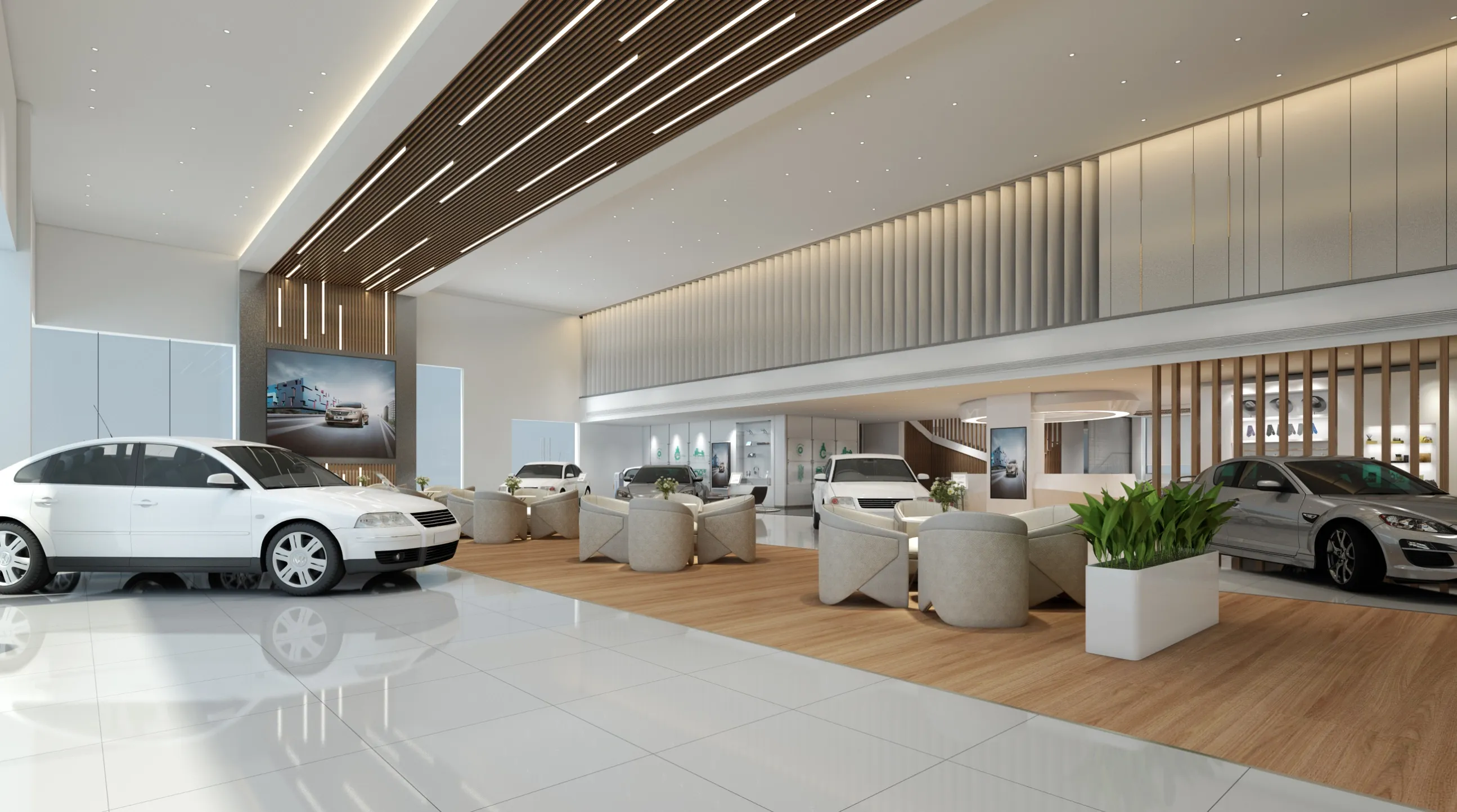
How ARTLITE builds for it. Irregular shape linear fixtures are a core custom line for us, not an exception: arcs, crosses, Y-shapes and oversized polygons are cut, joined and pre-assembled in our bending and mitering cell, arriving as keyed Plug & Play sections that hold the designer's geometry exactly. Underneath, high-CRI COB packages — CRI92+ on request — give skin tone, equipment and merchandise the saturation that 80-CRI bars wash out, while the output tier keeps pace with high-intensity training and display zones
4. Underground Parking: A 24/7 Economics Problem
Where buyers get burned. Parking is the fixture-count champion of any building, and it burns 24 hours. High consumption and short lifetimes show up directly on the property's P&L — electricity and relamping labor, repeated across hundreds of units. The environment adds a quieter killer: humidity and condensation creep into standard fixtures and short the drivers.
What the application actually demands is luminous efficacy, sealed electronics and smart sensing — the numbers that decide return on investment.
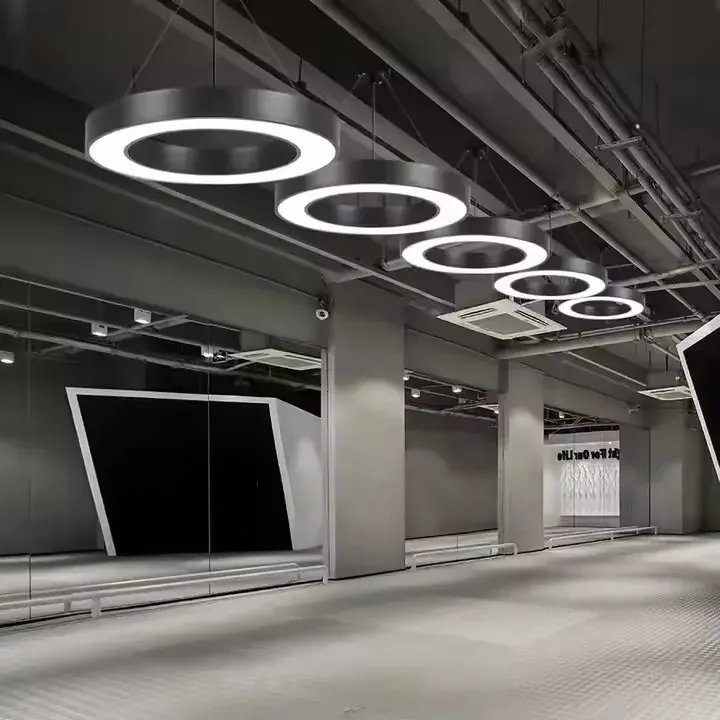
How ARTLITE builds for it. Our utility linear systems for parking and back-of-house pair high-efficacy output with microwave motion sensors: vehicles trigger full brightness, empty lanes fall back to a 20% standby level that maintains code-compliant minimum illuminance while cutting energy dramatically. The electronics are moisture-sealed, surge-protected at 6–10 kV against grid instability, and driven by long-life LiFud and Eaglerise platforms chosen for exactly this 24/7 duty. For the project owner, the payback conversation stops being theoretical: sensor standby logic alone typically rewrites the ROI chapter of the proposal.
Material Honesty: Why We Insist on 6063-T5 and Optical-Grade PMMA
Two material decisions quietly decide whether your linear light is a ten-year asset or a three-year complaint, and neither shows up in a photometric PDF.
6063-T5 aviation aluminum, not recycled alloy. Heat is the silent killer of LED lifetime: as a working rule, every ~10°C of extra junction temperature roughly halves the rated life. 6063-T5 conducts heat at roughly 200 W/m·K; recycled alloys, contaminated with iron and uncontrolled silicon, conduct meaningfully worse and anodize inconsistently. The cheaper extrusion saves cents per meter and costs you the L80 lifetime you paid for — plus the surface finish that made the fixture architectural in the first place.
Non-yellowing optics. The yellowed, tired-looking diffuser after two summers is recycled or unstabilized plastic doing what unstabilized plastic does under UV and heat. We use optical-grade PMMA and UV-stabilized polycarbonate — materials specified to pass light and stay passing it — because a diffuser's job on year three matters as much as its job on day one.
The Anti-Regret Specification Checklist
Ninety percent of linear lighting regret traces back to decisions nobody asked about at quotation stage. Ask them. Put this table in your next RFQ:
# | Specification Item | What to Demand From Your Supplier |
|---|---|---|
1 | Installation Mode | Recessed / surface-mounted / suspended / cove / wall-washer — confirm housing variant per zone |
2 | Total Run Lengths | Exact lengths to the millimeter, per run, from the layout drawing |
3 | Shapes & Corners | Mitre angles, curves and radii, closed polygons — factory-fabricated, never field-cut |
4 | Light Distribution | Down only / Up only / Up + Down — state the direct:indirect ratio explicitly |
5 | Dimming Protocol | DALI-2, 0-10V, Triac, Zigbee, Casambi — tested low-dim behavior, flicker data on request |
6 | IP Rating | IP20 dry interiors through IP68 submerged — with the sealing method specified |
7 | Color Consistency | CCT, CRI (TM-30 data on request) and single-bin sourcing (≤3-step MacAdam) across the entire order |
8 | Driver Brand & Access | Named driver brand; external, centralized or tool-free access — defined before, not after |
9 | Optical Material | Optical-grade PMMA / UV-stabilized PC, non-yellowing warrantied |
10 | Sensing & Surge | Sensor type and standby dimming level; surge protection rating (6–10 kV for parking and industrial zones) |
Working With ARTLITE GROUP
- Sampling: 1–3 days on standard platforms
- Bulk production: 10–15 days after sample approval
- MOQ: from 100 pcs per SKU
- Design protection: strict NDA on every custom program — drawings, molds and optics stay yours
Send Us the Drawing, Not Just the Quantity
LED linear lighting regret is almost never about the LED chip. It is about pixelation nobody modeled, joints nobody engineered, drivers nobody can reach, a ceiling nobody can wash — and a product family nobody matched to the project. Every one of those is a factory decision that can be made correctly — cheaply — before production, and expensively after installation.
That is the difference an OEM/ODM linear light factory makes. Send ARTLITE GROUP your drawings, blueprints or even a reference photo of the effect you want. Our engineers will return a DFM review with run lengths, corner solutions, distribution ratios, driver strategy and an IP-sealing plan — plus a quotation for a custom LED linear light program that installs in hours and looks right for a decade.
Request your tailored RFQ today: sales@artlitegroup.com · www.artlitegroup.com
ARTLITE GROUP — vertically integrated LED lighting manufacturing since 2010, serving clients in 45+ countries.